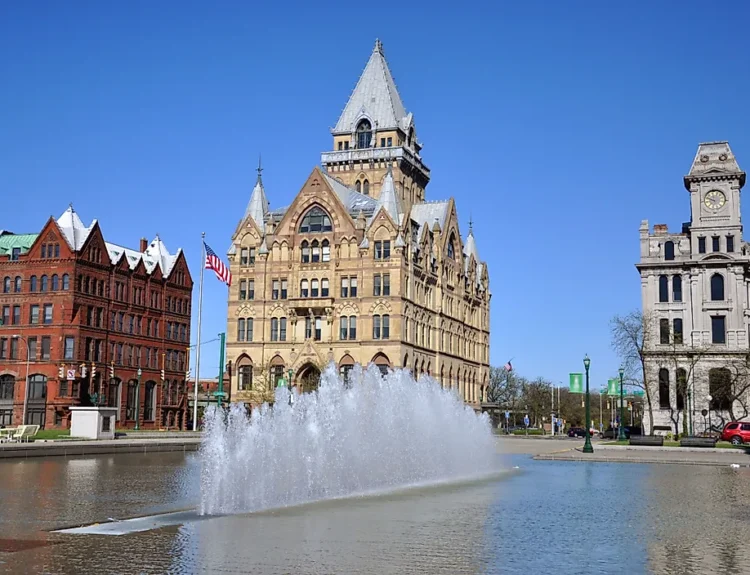

A buyer does not leave Nashville because the dream got smaller. Most leave because the math got louder. Murfreesboro has become the Nashville suburb many families, first-time buyers, remote workers, and small investors study when Davidson County stops making sense on paper. The draw is not only a lower payment. It is space, schools, daily convenience, job access, and a city large enough to stand on its own.
That matters because spillover demand is strongest when the backup choice feels like a real choice. A household priced out of Nashville may still want a Middle Tennessee life: weekend games, health care access, music jobs, airport reach, and a short drive to family across the metro. Murfreesboro answers that search with a bigger local base than many bedroom communities. For buyers comparing options, local real estate visibility also shapes which markets get noticed first. This is why the Murfreesboro housing market deserves a closer look, not as a cheap echo of Nashville, but as a city absorbing demand with its own reasons to grow.
The Spillover Pattern Starts With Payment Pressure
Murfreesboro’s buyer story begins in Nashville living rooms, not in subdivision sales offices. A couple runs the numbers on a modest house near a job center. The down payment feels possible. Then the monthly payment lands. Insurance, taxes, rate pressure, and a higher purchase price turn “possible” into a stretch that leaves no room for repairs, childcare, or savings.
That is where spillover buyers change the map. They do not always want to move farther out. They often start by resisting it. Then they compare a tighter home in Davidson County with a newer or larger option in Rutherford County, and the trade starts to feel less like defeat. The move becomes a way to stay near the region, not a way to leave it behind. That emotional detail matters because buyers often choose the place that protects their routines, not the place that wins a spreadsheet by a narrow margin.
Why buyers follow the I-24 corridor instead of leaving Middle Tennessee
The I-24 corridor gives Murfreesboro a simple advantage: it keeps buyers connected to Nashville without forcing them to buy inside Nashville. Commutes can be messy, and nobody should pretend otherwise. Still, access to downtown Nashville, the airport side of the region, Smyrna, La Vergne, and other job pockets keeps Murfreesboro in play for households with split work locations.
A nurse working shifts near Nashville and a spouse with a hybrid office job may see Murfreesboro as the middle ground. The commute is not perfect, but the home search may open up from a small older house to a newer place with a garage, a usable yard, and a school zone that fits family plans. That is not only a price decision. It is a household management decision. It also helps when friends, grandparents, and work contacts still sit across the broader metro.
The non-obvious point is that commute friction can strengthen demand in certain pockets. Buyers who accept I-24 traffic tend to care more about the exact side of town, school routes, and access to shopping. That makes some Murfreesboro neighborhoods act like micro-markets. A home that cuts ten minutes off a daily drive may beat a larger house on the wrong side of town.
How Nashville affordability changes buyer standards
When people are priced out of Nashville, they rarely carry the same wish list into the next city. They edit it. Some give up walkability. Some give up a historic street. Others give up being close to restaurants and choose a subdivision with a better bedroom count. Murfreesboro benefits because it gives buyers enough wins to make those edits feel fair.
This is why Rutherford County homes can attract people who once ignored the county. A buyer who wanted East Nashville charm may not find the same feel, but they may find a newer kitchen, a safer budget, and a yard that works for a dog or children. That kind of trade has emotional weight. Buyers do not need the perfect replacement. They need a replacement that still feels like progress.
There is a catch. Spillover demand can lift prices in the receiving city over time. The same affordability that pulls buyers into Murfreesboro can fade if supply, roads, and wages do not keep up. That is the quiet risk in every growing edge market: success can make the original bargain harder to find. A buyer who waits for the old price gap to return may end up chasing a market that has already reset.
Why This Nashville Suburb Keeps Catching Spillover Demand
Murfreesboro is not a small town waiting for Nashville to send buyers its way. It has its own employment base, university traffic, retail gravity, medical services, and county-seat role. That gives it a thicker demand floor than a place that relies on commuters alone. When a city has more than one reason for people to move in, its housing market can handle changing buyer moods with less drama.
The U.S. Census Bureau QuickFacts page for Murfreesboro shows the city’s recent population growth and housing profile, which helps explain why builders, landlords, and buyers keep watching the area. The key is not growth by itself. Plenty of places grow. The key is growth tied to daily-life anchors that keep demand from feeling thin. A city that only adds rooftops can feel stretched. A city that adds rooftops around jobs, services, and schools can feel more durable.
The city has more than commuter appeal
Middle Tennessee State University gives Murfreesboro a steady rhythm that many suburbs do not have. Students, faculty, staff, visiting families, renters, restaurants, and service jobs all feed the local economy. MTSU describes itself as serving more than 20,000 students with hundreds of majors and concentrations, which gives the city a built-in education engine beyond the Nashville job market.
That matters for housing because university towns create layered demand. A parent may buy a small condo for a student. A young professor may rent before buying. A local investor may prefer a house near campus because the renter pool is easier to understand. None of those buyers are the same as a Nashville commuter, yet they all add pressure to the Murfreesboro housing market.
The counterintuitive part is that college demand does not only support rentals. It can support ownership too. A graduate who stays in Rutherford County after school already knows the roads, gyms, coffee shops, and employers. Familiarity lowers the fear of buying, and that can turn a temporary resident into a long-term homeowner. That path is easy to miss because it happens slowly, one lease renewal and one local job at a time.
Retail, schools, and health care make the move easier
Many buyers can forgive distance if daily errands get easier. Murfreesboro has the big-box stores, local restaurants, clinics, parks, youth sports fields, and school choices that make a move feel practical on day one. That sounds ordinary until you compare it with a smaller outer town where every errand adds another drive.
A family leaving a cramped rental in Nashville may not be shopping for pure charm. They may be asking sharper questions. How far is the pediatrician? Can we reach groceries after work? Are there enough weekend activities for kids? Can visiting grandparents get around without stress? Murfreesboro answers many of those questions in one place.
This is also where Nashville metro rental market trends connect with ownership demand. Renters who leave Nashville for more space may test Murfreesboro first, then buy after they learn the area. The rental decision becomes a preview. If the preview works, ownership demand follows. That is one reason a strong rental base can feed future sales instead of competing with them.
What Buyers Trade When They Choose Murfreesboro
The move to Murfreesboro is not a magic escape from high housing costs. It is a trade. Buyers often gain house size, newer construction, parking, yard space, and a wider set of price points. In return, they may accept longer drives, heavier traffic windows, less urban texture, and faster change around them.
That trade can be smart, but only when you name it clearly. Too many buyers treat the move as a simple “more house for the money” decision. That misses the real test. The right question is whether the home still works after the excitement of extra square footage wears off. A bigger house can still be the wrong house if it steals too much time. For a household with two working adults, a school pickup schedule, and aging parents nearby, ten extra miles can turn into a daily strain. The floor plan matters. So does the Tuesday night drive home.
Newer homes can hide higher living costs
Newer subdivisions often look like the clean answer to Nashville sticker shock. They offer fresh finishes, open floor plans, warranties, and streets full of other buyers making the same move. For many households, that is exactly what they need. Less repair risk has value, especially for first-time owners.
Still, the monthly cost does not stop with the mortgage. Some homes come with homeowners association fees, longer drives, higher utility use, lawn care, and furniture needs for larger spaces. A buyer moving from a Nashville apartment into a four-bedroom house may discover that the spare room was cheaper in theory than in practice. The payment may work, while the lifestyle costs quietly crowd the budget.
The non-obvious insight is that older Murfreesboro homes can sometimes offer better control, even when they need updates. A house closer to an established route may save time every week. A smaller yard may lower upkeep. A less shiny kitchen may be worth it if the payment leaves room for real life. Newer is not always safer. Sometimes simple is safer.
Rutherford County homes appeal to more than one buyer type
Rutherford County homes draw first-time buyers, move-up families, out-of-state relocators, student-housing investors, and Nashville workers who no longer want Nashville prices. That mix can make competition uneven. One weekend may feel calm, while a well-priced home near the right school or commute route may still pull fast offers.
For buyers, this means averages can mislead. A citywide number may say the market is cooling, but the house you want may not care. A clean three-bedroom near a practical route can behave differently from a larger house farther from daily needs. Local fit matters more than broad mood. The listing that solves five routine problems can move while flashier homes sit.
Investors should be careful for the same reason. “Murfreesboro is growing” is not an investment plan. A rental near MTSU, a home near a medical job cluster, and a new-build on the edge of town all carry different tenant profiles. The best investors underwrite the renter, not only the city. That means checking parking, pet demand, bedroom mix, and commute patterns before chasing the lowest price per square foot.
What Investors and Homeowners Should Watch Next
Murfreesboro’s next chapter will depend on whether growth feels livable. Demand can be strong, yet residents can still feel strained if roads clog, schools crowd, or new construction outruns public services. That tension is normal in fast-growing Sun Belt markets. It is also where smart buyers separate a good deal from a headache.
The city’s appeal is clear, but the best moves are patient. A home that looks affordable today can become expensive if it forces extra commuting costs, repair bills, or a resale problem. The better play is to study the small details that future buyers will care about too. Growth rewards owners who buy practical homes. It can punish owners who buy the wrong location during a wave of excitement.
Watch roads, schools, and builder supply before chasing appreciation
A buyer should spend as much time studying daily routes as granite counters. Drive the commute during the hour you will use it. Visit the grocery store after work. Check school zoning carefully, because boundaries can change as population grows. A house is not only a structure. It is a routine.
Builder supply also deserves close attention. New construction can help meet demand, but it can also give buyers more choices in certain price bands. If builders offer incentives, a resale seller nearby may have to compete harder. That can be good for buyers and less pleasant for owners who need to sell soon.
This is where first-time homebuyer planning tips can help a buyer slow down. The goal is not to win a house this weekend. The goal is to own a home that still makes sense after taxes, traffic, repairs, and resale odds have had their say. In a fast-moving region, restraint can be a real advantage.
Long-term demand will favor practical locations over hype
The strongest Murfreesboro locations will likely be the ones that make ordinary life easier. That may mean access to I-24, proximity to MTSU, shorter school runs, nearby medical services, or simple access to stores and parks. Hype can sell a weekend showing. Convenience sells the next buyer too.
One example is a modest home that sits near a clean commute route and basic services. It may not photograph as well as a larger house farther out, but it may age better in buyer demand. When budgets tighten, people pay for fewer daily problems. That is true in expensive markets and growing suburbs alike.
For investors, the same rule applies. A rental that saves a tenant time can beat a newer unit with a weaker location. For homeowners, a practical location gives more exit paths: families, students, health care workers, and Nashville commuters can all see a reason to care. That wide appeal is the real safety net. The best home is not the one with the loudest listing. It is the one with the most future buyers.
Conclusion
Murfreesboro’s rise is not hard to understand, but it is easy to oversimplify. Buyers are not spilling out of Nashville only because they want cheaper houses. They are chasing a version of Middle Tennessee life that still fits the budget, the commute, and the next five years of family plans.
That is why the Nashville suburb story has weight. Murfreesboro offers enough local strength to be more than a pressure valve, and enough access to Nashville to stay tied to the region’s job and culture engine. Still, smart buyers should not treat the city as a discount code for Nashville. They should study routes, schools, supply, and resale depth before they fall for square footage.
The best opportunity is not always the biggest house. It is the home that keeps working when rates move, traffic grows, and the market cools. For priced out of Nashville buyers, Murfreesboro can be a strong next move when the decision is made with patience, local detail, and honest math.
Frequently Asked Questions
Is Murfreesboro a good place to buy a home if Nashville is too expensive?
Yes, it can be a strong option for buyers who still want access to Middle Tennessee jobs and culture without paying Nashville prices. The best fit depends on commute tolerance, school needs, and how much value you place on space, newer homes, and daily convenience.
How far is Murfreesboro from downtown Nashville?
Murfreesboro sits southeast of downtown Nashville, and the drive often depends more on traffic than mileage. Many commuters use I-24, so the same trip can feel manageable outside peak hours and frustrating during busy morning or evening windows.
Why are spillover buyers looking at Murfreesboro?
Many buyers want to stay connected to the Nashville region but need more room in the budget. Murfreesboro offers a deeper mix of homes, local jobs, MTSU-related demand, retail access, and family services, which makes the move feel less like a fallback.
Is the Murfreesboro housing market only driven by commuters?
No. Commuters matter, but they are not the whole story. MTSU, medical services, retail jobs, county government, local schools, and investor activity all support housing demand. That mix gives the city more balance than a pure bedroom community.
Are Rutherford County homes still affordable?
Some homes remain more affordable than comparable Nashville options, but affordability depends on payment, taxes, insurance, commute costs, and repairs. Buyers should compare the total monthly cost rather than focusing only on the sale price or square footage.
What should first-time buyers check before moving to Murfreesboro?
Start with commute routes, school zones, HOA fees, utility costs, and resale appeal. Visit the area at the times you will live your normal routine. A home that looks perfect on Saturday may feel different on a rainy Tuesday morning.
Is Murfreesboro good for rental property investors?
It can be, but the rental strategy must match the location. A home near MTSU may attract a different tenant than a house near a family school zone or medical job center. Strong investors study tenant demand before they study appreciation hopes.
Will Murfreesboro keep growing because Nashville is expensive?
Growth is likely to stay supported as long as Nashville remains costly and Middle Tennessee keeps attracting jobs and residents. Still, growth can slow if payments rise, traffic worsens, or supply outpaces demand in certain price ranges.