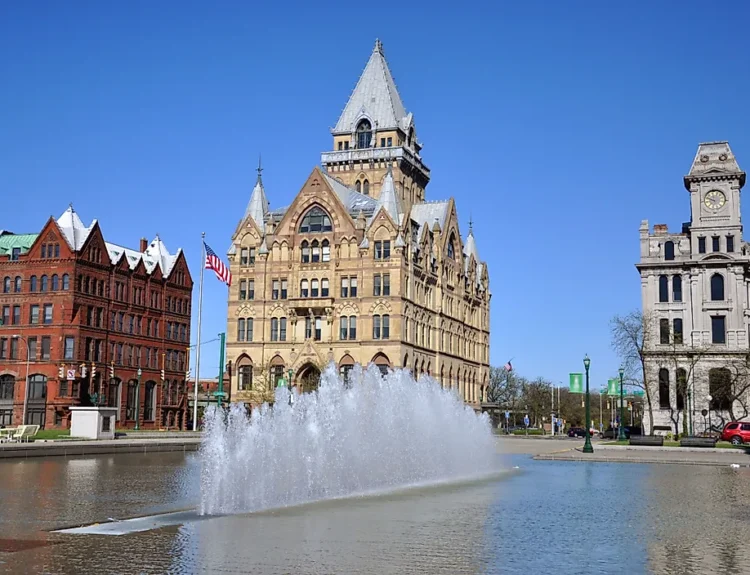

Some cities depend on one big story, and that can make them fragile. Columbia has a different shape. The rental demand here comes from two everyday forces that do not move in the same rhythm: state government work and university life. One runs on offices, agencies, courts, health plans, and public budgets. The other runs on semesters, roommates, internships, parents, and new graduates who are not ready to buy. That mix matters for website owners, landlords, local agents, and investors trying to read the market without chasing hype. A renter in Columbia might be a junior at the University of South Carolina, a nurse starting at a regional hospital, a public employee moving closer to downtown, or a young couple testing the city before choosing a suburb. Those renters do not all want the same unit. The city rewards owners who know the tenant before they price the home. For broader market positioning, platforms like regional real estate visibility can help owners frame Columbia as more than a cheap Southern city. You are not selling a roof alone. You are selling access to work, class, routines, and the next stage of someone’s life.
Why Rental Demand Has Two Engines in Columbia
Columbia is not a beach market, a retirement-only market, or a single-employer town. Its strength comes from overlap. The State House, agency offices, the courts, the university, hospitals, and neighborhood retail all sit close enough to affect the same housing map. That creates friction for renters, but it also creates choice. The same duplex near downtown can interest a graduate student one year and a state worker the next. This is why Columbia needs to be read by renter group, not by city average. Averages flatten the story. They hide the difference between a student who wants to walk to class, a staffer who needs a short drive to a state office, and a relocating household that wants a six-month landing spot before buying.
State capital jobs create a year-round renter base
A capital city has a different pulse from a resort town. Leases are not tied only to summer travel or football weekends. State agencies, legal offices, lobbying shops, courts, nonprofit groups, and service firms keep people moving in and around the central city through the whole year. When the legislature is in session, the downtown rhythm changes. When it is not, the government base does not vanish.
That does not mean every public employee rents near Main Street. Many buy in Lexington, Irmo, Forest Acres, or Northeast Columbia. Still, early-career workers, contract staff, interns, legislative aides, and new hires often rent before they settle. That first lease is where the state capital housing market earns its quiet power. It gives newcomers time to learn traffic, schools, neighborhoods, and where their daily habits fit.
The non-obvious part is that government work can help the middle of the market more than the luxury end. A renter with a stable paycheck may not want a trophy apartment. They may want parking, a sane commute, laundry, and a landlord who fixes the air conditioning fast in July. Plain housing can win because the tenant is buying relief from daily friction.
University life fills gaps that job demand leaves open
University towns have a visible rental season, but Columbia’s campus market is not limited to August move-ins. Students transfer, graduate programs start, internships shift, and parents search for safer, cleaner housing after a bad first apartment experience. That churn keeps attention on Columbia SC rentals near campus, Five Points, Shandon, Rosewood, and the Vista. It also creates a second wave after the first rush, when students who made a rushed choice start looking for something better.
The University of South Carolina gives Columbia a constant stream of young renters, but the better insight is what happens after graduation. Some students leave. Some stay for graduate school, health care jobs, tech roles, public work, or a first sales position. They may move from a shared house to a one-bedroom, then later to a townhouse. That movement can stretch a renter relationship across years if the owner has more than one unit type.
That step-up path is easy to miss. Many investors treat university town rentals as a student-only play. In Columbia, the stronger bet may be a property that can serve students today and young workers tomorrow. The unit does not need to be fancy. It needs to be durable, clean, and close to daily life. A house that survives roommates yet still feels respectable to a new professional has more paths to occupancy.
Where Columbia SC Rentals Fit on the City Map
Columbia’s rental map is not one circle around campus. It is a set of small decisions about commute, noise, parking, school zones, nightlife, and price. A tenant looking near the Horseshoe may care about walking to class. A state employee may care about getting to an office near Assembly Street without crossing half the metro. A nurse may care about shift-friendly access more than charm. The best owners do not ask whether a neighborhood is “good.” They ask who feels at home there on a Tuesday morning. That question changes the whole search. It moves attention from headline rent to trash pickup, lighting, porch safety, and whether the tenant can get groceries after work without making the day harder.
Downtown, Five Points, and Shandon serve different renters
Downtown and the Vista often draw renters who want restaurants, offices, events, and a shorter trip to the State House area. That can include young professionals, graduate students, and people who dislike suburban driving. The tradeoff is clear: rents can run higher, parking can be tighter, and noise may matter on weekends. A beautiful unit can still lose renewals if the tenant dreads coming home at night or circling for a space.
Five Points has a student reputation, but it is not one-note. A property on the wrong street can face wear, turnover, and party complaints. A property a few blocks away with better layout and parking may reach a different tenant. Same district, different risk. You can stand on one corner and see three rental stories at once: undergraduates, food-service workers, and young professionals who want walkability without a long lease in a tower.
Shandon shows why local knowledge beats broad labels. Parts of it appeal to students, but other pockets draw professionals who want old-house character without leaving the urban core. For owners, the lesson is simple. Do not buy a ZIP code. Buy the tenant pattern on that block. The block tells you whether the porch is an asset, whether off-street parking is a need, and whether a premium finish will earn its keep.
Rosewood, Cayce, and West Columbia widen the renter pool
The renter who wants Columbia but not the loudest part of Columbia often looks outward. Rosewood can work for tenants who want a neighborhood feel near USC and downtown. Cayce and West Columbia can appeal to renters who want river access, easier parking, or a shorter path toward Lexington County jobs. These areas also catch people who like Columbia’s core but need a calmer end to the day.
This is where Columbia SC rentals become more flexible. A unit across the river may not pull the same student volume as one near campus, but it may attract a steadier tenant who wants space, a small yard, or less street noise. That can lower turnover costs. It can also make pet-friendly housing more valuable, since a small outdoor area may matter more than a polished lobby.
A counterintuitive point: being slightly less convenient can help if the home feels more livable. A two-bedroom with storage and parking can beat a cramped “walkable” unit when the renter has a dog, a partner, or night shifts. Distance is not always a weakness. Sometimes it filters for longer stays. Owners who understand that can avoid overpaying for closeness when the renter is searching for comfort.
What Investors Should Watch Before Buying
Columbia’s story is attractive, but that does not make every rental a good deal. A market with two renter streams can still punish lazy math. Insurance, repairs, older housing stock, stormwater issues, student turnover, and local code rules can all eat the spread between rent and ownership cost. The win comes from matching the property to the tenant, not from believing the city name will do the work. In a city with older neighborhoods and hot summers, underwriting must start with the bones of the house. Small defects become expensive when tenants move in during peak heat, when vendors are busy, and when a parent or employer expects a fast answer.
Cash flow depends on maintenance, not only rent
Older homes near campus and downtown can look perfect on a spreadsheet. Then the roof, HVAC, sewer line, or porch tells the truth. Columbia heat is not gentle on systems, and tenants judge landlords fast when cooling fails. A cheap house with old mechanicals may be a high-cost house wearing a discount costume. That is not a small detail. It is the deal.
The small-city real estate investment guide should sit next to your repair budget, not after it. A landlord who underwrites a $200 rent increase but forgets a $9,000 system replacement is not investing. They are hoping. A better approach is to price the first year with repairs in mind, then raise quality before raising rent.
This is one reason the state capital housing market rewards boring operators. The owner who answers calls, prices fairly, and keeps the home clean can beat a flashier property with poor management. In Columbia, reputation travels through parents, classmates, coworkers, and local Facebook groups. A landlord who gets known for fair deposits and fast repairs gains a quiet marketing channel.
Student leases need a different risk model
Student renters can be profitable, but they are not passive income. You may need co-signers, room-by-room expectations, stronger move-in photos, tougher cleaning standards, and clear rules on parking and noise. The rent may look better, but the management load can rise fast. A four-bedroom lease with four young tenants is not the same business as a one-bedroom lease to a policy analyst.
That does not make university town rentals a bad idea. It means they need structure. A four-bedroom house near campus has a different job than a one-bedroom near a government office. The first is about bedroom count, wear control, and lease timing. The second is about privacy, commute, and comfort. Put the wrong lease model on the wrong property and the profit starts leaking.
The mistake is trying to manage both the same way. Students often need clarity before problems happen. Professionals often need speed after problems happen. A landlord who knows that difference can protect the asset and keep tenants longer. Good management is not a personality trait here. It is a defense against vacancy, damage, and weak renewals.
Why Columbia’s Rental Story Feels More Durable Than Flashy
Some markets get attention because prices jump fast. Columbia is more interesting because its renter base is layered. It has a public-sector anchor, a university anchor, a health care base, military influence from Fort Jackson, and a metro that offers lower living costs than many larger Southern cities. That does not promise easy profit. It points to repeat need. The city’s appeal is less about a boom and more about having several sources of everyday housing pressure. That matters when rates, insurance, or buyer confidence shift. A renter may delay buying, but they still need a workable place close to job, school, family, or training.
Affordability still matters, but it is not the whole pitch
The U.S. Census Bureau QuickFacts for Columbia gives owners a useful baseline on population, rent, income, and housing occupancy. But numbers alone can mislead. A median rent figure does not tell you whether your target renter wants a fenced yard, a second bath, or a ten-minute drive to campus. Data tells you the field. The showing tells you the tenant.
Affordability brings renters into the conversation. Fit keeps them there. A young state employee may accept an older kitchen for a short commute. A graduate student may accept less space for safety and quiet. A family between home purchases may need storage more than nightlife. Each renter is trading something, and the winning property makes that trade feel fair.
That is why Columbia should not be sold as “cheap.” Cheap attracts bargain hunters. Useful attracts tenants who renew. The better angle is value with daily convenience. If a listing explains parking, commute, laundry, pets, and nearby routines with care, it often feels more trustworthy than one shouting about price.
The best properties serve more than one life stage
A single-purpose rental can work near campus, but dual-use housing often has more staying power. A two-bedroom bungalow in Rosewood, a small duplex near downtown, or a clean apartment close to transit corridors can serve students, young professionals, medical workers, and people relocating for state work. A flexible property gives the owner more answers when one renter group slows down.
This is where the college-town rental property strategy becomes useful. You are not only asking, “Can I rent this in August?” You are asking, “Who rents this in February if a student group backs out?” That second question protects you. It forces you to think about winter listings, mid-year job moves, and tenants who do not follow the academic calendar.
The surprise is that flexibility can beat maximum rent. A landlord chasing the highest student lease may earn more on paper and lose more in repairs, vacancy, and stress. A slightly lower rent to a tenant who stays two years can produce the better result. The city rewards patience more than swagger. It favors owners who want repeatable income, not bragging rights.
Conclusion
Columbia works because it has more than one reason for people to rent. The State House brings public work, policy traffic, legal jobs, and support services. The university brings students, parents, staff, graduates, and social energy. Those groups overlap, but they do not behave the same way.
That is the core lesson for owners studying rental demand in the city. You need to know which renter your property serves, what they fear, what they value, and how long they are likely to stay. A clean two-bedroom in the right pocket may beat a larger house with messy management. A modest unit with parking may beat a trendy address with daily friction.
Columbia is not a market for blind buying. It is a market for careful matching. Study the block, budget for repairs, write better leases, and build around real tenant life. If you do that, this capital-and-campus city can become a steady piece of a long-term rental plan. The best move is not to chase the loudest neighborhood. It is to own the home that fits the next renter before they start searching.
Frequently Asked Questions
How much do Columbia landlords depend on University of South Carolina students?
Students matter, especially near campus, Five Points, Shandon, and parts of Rosewood. Still, Columbia landlords should not depend only on students. State workers, medical staff, military families, interns, and young professionals also shape the tenant pool.
Is Columbia South Carolina a good city for first-time rental investors?
It can be a good fit for patient buyers who study repairs, location, and lease type before purchasing. Older homes can carry hidden costs, so first-time investors should avoid buying only because the price looks lower than larger Southern markets.
What neighborhoods are popular for renters near USC?
Renters often look at Five Points, Shandon, Rosewood, the Vista, and downtown pockets close to campus. Each area has a different feel, so parking, noise, safety, and roommate layout matter as much as distance from classrooms.
Do state government jobs help Columbia’s housing market?
They help create a year-round renter base. State work brings employees, contractors, interns, legal professionals, and support workers into the city. That can soften the seasonal swings found in markets that depend mainly on students or tourism.
Are university town rentals risky in Columbia?
They can be risky without strong rules and careful screening. Student housing often needs co-signers, clear lease terms, move-in photos, and faster maintenance planning. The upside can be strong, but management quality decides the result.
What type of rental property works best in Columbia?
The best property depends on the tenant target. Near campus, bedroom count and layout matter. Near downtown, commute and parking matter. In nearby neighborhoods, livability, storage, and pet-friendly features can help renters stay longer.
Is Columbia cheaper than Charleston or Charlotte for renters?
Columbia is often seen as a lower-cost option than Charleston and many Charlotte-area neighborhoods, but exact rent depends on location and unit quality. Renters still compare commute, safety, parking, and condition before choosing.
How can a landlord reduce vacancy in Columbia?
Price the unit realistically, repair problems before showings, and write the listing for a clear tenant type. A student group, a public employee, and a medical worker respond to different selling points. Better targeting can shorten empty periods.