
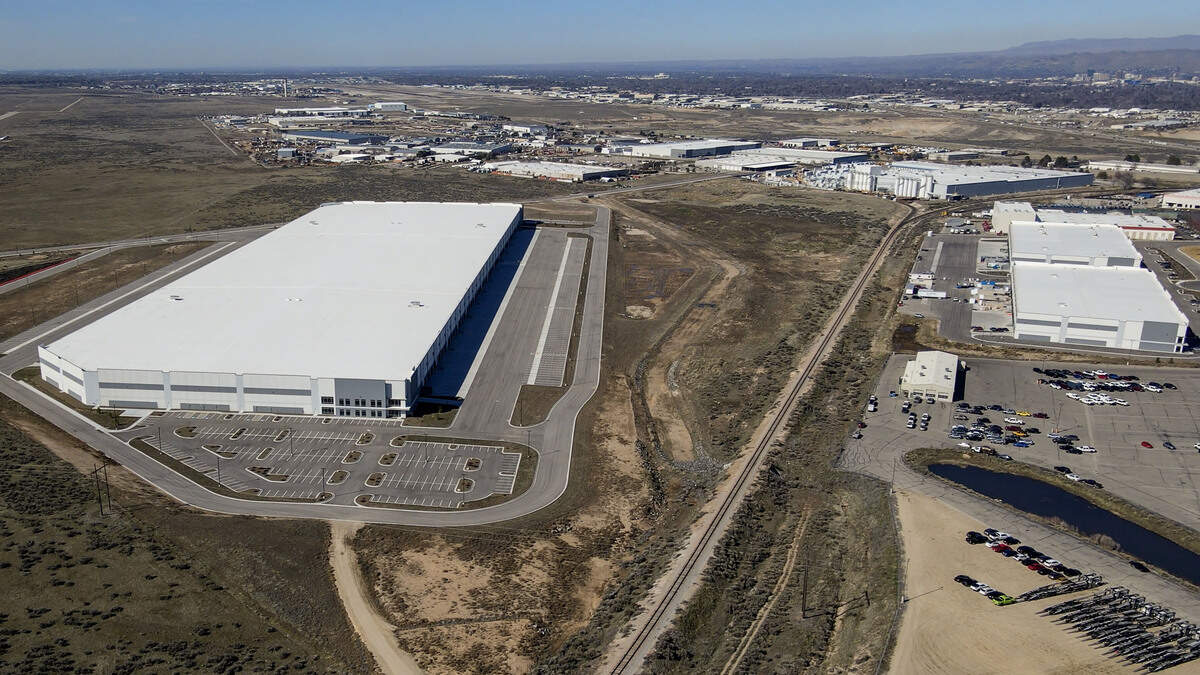
Meridian is no longer the quiet suburb people mention only after Boise. Buyers, builders, and small investors are watching it because the city keeps adding households, jobs, retail nodes, schools, and road pressure at the same time. That is why New Construction Investment has become a serious search for Americans who want growth without paying coastal prices. The city’s population was estimated at 142,988 on July 1, 2025, up 21.4% from the April 2020 estimates base, and far above its 75,092 count in 2010. For readers tracking real estate growth updates, Meridian stands out because demand is not built on one flashy project. It is built on family migration, Ada County job access, and the need for homes that match modern life. Meridian Idaho real estate also sits inside the larger Treasure Valley housing market, where affordability, land, commute routes, and builder incentives all shape buyer behavior.
Meridian’s Growth Is Not Random Suburban Sprawl
Meridian grew because it sits in the path of daily life. That sounds simple, but it matters. People do not move to a city only because a subdivision looks clean on a brochure. They move because school drop-off, work, groceries, medical care, parks, and weekend errands feel possible without burning half the day in the car.
That is the real story behind Meridian Idaho real estate. The city sits between Boise, Nampa, Eagle, and Kuna, which gives residents access to the Boise job base while still offering newer neighborhoods and more room than the urban core. A family relocating from California, Oregon, Washington, or Utah may not be chasing a bargain in the old sense. They may be chasing a better daily setup.
Why families keep choosing Meridian over older markets
Many older cities can offer charm, but they cannot always offer inventory that fits how people live now. A family with two remote workers may need a dedicated office, a loft, a garage that can hold storage, and a kitchen open enough for weekday chaos. Older homes can be updated, but the cost of repair can scare off buyers who already feel stretched by mortgage rates.
Meridian’s edge is that many homes were built for this era. Buyers can find newer floor plans, wider streets, planned parks, and subdivisions that were designed around family routines. That does not make every purchase safe. It does mean the buyer pool often understands the product fast.
A non-obvious point: new homes do not always win because they are cheaper. Sometimes they win because the buyer can predict the first five years of ownership. Fewer surprise repairs can feel like a hidden discount when budgets are tight.
How population growth turns into housing pressure
Population growth does not become housing demand in a straight line. A city can add people and still disappoint investors if wages are weak or if residents treat it as a short stop. Meridian’s case looks stronger because many households appear to be settling into the area rather than passing through it.
Census data shows an owner-occupied housing rate of 74.6% for 2020–2024, with a median owner-occupied home value of $531,600 and median gross rent of $1,805. Those numbers tell a clear story. This is not a cheap market anymore, but it is still drawing people who can pay for stability.
That tension creates opportunity and risk at the same time. Builders can meet demand with fresh supply, but every added roof also puts pressure on roads, utilities, schools, and neighborhood patience. Investors who ignore that friction may buy the wrong product in the wrong pocket.
Why New Construction Investment Demand Follows Meridian’s Growth Map
The best real estate plays in Meridian are not only about buying where the cranes are. They are about reading why the cranes showed up there. Growth follows land availability, road access, school capacity, retail expansion, and city planning choices. When those pieces line up, a subdivision becomes more than a row of houses.
This is where the Treasure Valley housing market gets interesting. Meridian does not stand alone. It competes with Boise for lifestyle, with Nampa and Caldwell for affordability, and with Eagle for higher-end demand. That competition shapes pricing. It also forces builders to offer homes that feel worth the premium.
Why buyers care about move-in certainty
A resale home can be a smart buy, but it often asks the buyer to solve problems right away. Roof age, HVAC life, flooring, paint, appliance wear, and inspection repairs can all enter the deal. In a higher-rate market, that can break confidence. Buyers may not want another unknown after they have already accepted a larger monthly payment.
A builder home answers that fear with warranties, clean systems, and a timeline. That is powerful. A couple moving from Seattle for a Boise-area job may not know local contractors, school zones, or commute patterns yet. A finished or near-finished home in Meridian can make the move feel less risky.
The counterintuitive insight is that builder incentives can matter more than list price. A rate buydown, closing cost credit, appliance package, or finished backyard may help a buyer qualify or preserve cash. The headline price may look firm, while the real negotiation happens in the payment.
Where demand can become too thin
No growth market rises evenly. Some neighborhoods will age better because they sit near employment, parks, schools, or retail. Others may depend too much on one selling point, like a lower entry price. When too many similar homes hit the market at once, buyers get picky.
That is why investors should study absorption, not only appreciation. A four-bedroom home near strong commute routes may have a deeper buyer pool than a larger house farther out with a narrow audience. Idaho new homes can look similar online, but two streets can perform differently if one has better access to I-84 or everyday services.
Boise Regional REALTORS notes that its regional reporting separates existing resale and new construction data for Ada County, which is useful because the two markets can move at different speeds. Treat that split as a warning. A strong resale market does not always mean every builder phase is underpriced.
Investors Need to Read the Demand Behind the Floor Plan
Meridian’s construction demand is tempting because growth feels visible. You can drive past framing crews, new retail pads, medical offices, and fresh roads. Still, visible activity is not the same thing as a smart purchase. The better question is: who will want this home next?
For long-term investors, the answer often starts with the end user. A rental that fits a relocating family, a nurse working in Ada County, a remote tech worker, or a couple waiting to buy can hold up better than a property chosen only because it is new. The home must solve a real problem for a real household.
Why build quality and layout matter more than square footage
Square footage can fool buyers. A 2,400-square-foot house with wasted halls, a tiny pantry, and poor office space may live worse than a smaller home with a better plan. In Meridian, where many households want practical comfort, layout matters.
Think about a three-bedroom home with a flex room near the entry. That space can become an office, homework room, guest room, or small studio. It gives the next buyer more ways to say yes. A bonus room over the garage may sound useful, but if it overheats in summer or feels cut off from daily life, it may not add the value people expect.
The quiet lesson is that a home’s resale story begins on day one. Investors should walk the model home like a future parent, renter, and buyer at the same time. Where do shoes land? Where does the dog sleep? Can two adults take calls without fighting for silence?
How rental demand differs from resale demand
A home that sells well is not always the best rental. Renters may care more about commute, school access, maintenance, pet rules, and monthly cost than premium finishes. Owners may pay extra for upgraded counters. Renters may prefer a fenced yard and a washer-dryer included.
This matters in Meridian because the gap between home prices and rents can tighten cash flow. A property may be excellent for long-term appreciation but weak as a pure monthly income play. That does not make it bad. It means the strategy has to match the numbers.
Use conservative math. Add vacancy, maintenance, property management, taxes, insurance, HOA dues, and future capital costs. Then ask whether the location can still attract a tenant if the Treasure Valley housing market cools for a season. If the answer depends on perfect rent growth, the deal is not ready.
The Real Opportunity Is Selective, Not Automatic
Growth markets attract two kinds of buyers: people who study the ground and people who chase noise. Meridian rewards the first group. The city has strong demand signals, but it also has rising prices, infrastructure stress, and competition from nearby communities.
That means the opportunity is not “buy anything new.” The opportunity is to understand how Meridian’s next phase will mature. Some areas will become more walkable and service-rich. Some will feel crowded before they feel complete. Some will benefit from commercial growth nearby, while others may deal with traffic before the payoff arrives.
Why infrastructure decides future value
Roads, schools, sewer capacity, and retail access shape real estate returns more than many buyers admit. A beautiful subdivision can feel frustrating if every errand requires a slow drive through backed-up intersections. On the other hand, a plain-looking area can improve fast when grocery stores, clinics, gyms, and restaurants arrive nearby.
Meridian is seeing that pattern in several corridors. Development around Ten Mile, Eagle Road, Chinden, and I-84 shows how commercial growth can support housing demand. Boise Regional REALTORS’ April 2026 report pointed to large medical, office, and venue plans tied to Eagle View Landing, including medical and office buildings planned to break ground in 2026.
The non-obvious insight: traffic complaints can signal demand, not failure. Congestion often appears before infrastructure catches up. Investors should not ignore it, but they should ask whether the city has a path to absorb it.
How to compare Meridian with nearby options
Meridian is not the only growth bet in southwest Idaho. Nampa, Caldwell, Kuna, Eagle, and Boise each offer a different mix of price, lifestyle, commute, and long-term appeal. A buyer focused only on Meridian may miss a better fit nearby. A buyer focused only on cheaper prices may miss why Meridian commands attention.
A practical comparison starts with three questions: Who will live there next? What daily problem does the location solve? What will the area look like in five years if planned projects finish late?
Idaho new homes in Meridian may carry a higher price than some nearby choices, but they can also offer stronger access to Boise-area jobs and services. That does not guarantee a better return. It gives the property a clearer audience, and in real estate, audience depth matters.
Conclusion
Meridian’s growth story is not a mystery once you look past the headline. People are choosing it because it offers a workable version of the American move-up dream: newer homes, strong regional access, family-friendly planning, and enough commercial growth to make daily life feel complete. The city is not risk-free, and higher prices demand sharper math than they did a few years ago. For investors, New Construction Investment in Meridian makes sense only when the location, layout, payment, and exit plan all agree with each other. The best opportunities will likely come from homes that serve real households, not from projects bought because the market feels hot. Watch infrastructure, builder incentives, rental math, and nearby competition with clear eyes. Then act when the property solves a durable need. Meridian is growing, but the smart money will still be patient, picky, and grounded.
Frequently Asked Questions
Is Meridian Idaho a good place to invest in real estate?
Yes, for buyers who study the numbers and choose strong locations. Population growth, owner demand, and newer housing stock support interest. The risk is overpaying for a home that depends on perfect appreciation or weak rental assumptions.
Why is Meridian Idaho growing so fast?
People are drawn by Boise-area job access, newer neighborhoods, schools, parks, and a suburban lifestyle with more space. Growth also reflects broader migration into Idaho from higher-cost western states, where buyers often seek stability and newer homes.
Are new homes in Meridian better than resale homes?
They can be better for buyers who want lower repair risk, modern layouts, and builder incentives. Resale homes may offer stronger locations or mature landscaping. The better choice depends on payment, inspection results, commute, and long-term resale appeal.
What should investors check before buying in Meridian?
Study rent comps, builder incentives, HOA rules, school boundaries, traffic patterns, future nearby development, and resale competition. A good-looking home can still be a weak investment if the payment is too high or the tenant pool is narrow.
Is Meridian cheaper than Boise?
Often, Meridian offers more newer-home options than central Boise, but it is not a low-cost market. Pricing depends on neighborhood, age, size, schools, and commute routes. Buyers should compare monthly payment, not only list price.
Do Meridian rentals have strong demand?
Rental demand can be solid when the home fits families, relocating workers, pet owners, or people waiting to buy. Cash flow can be tight because purchase prices are higher, so investors should run conservative rent and vacancy numbers.
What areas of Meridian are popular with buyers?
Buyers often watch areas near strong road access, schools, parks, shopping, and medical or office growth. Corridors near I-84, Ten Mile, Eagle Road, and Chinden draw attention, but each subdivision still needs its own review.
Will Meridian keep growing in the next few years?
Growth is likely to continue if jobs, housing supply, and infrastructure keep supporting new households. The pace may shift with mortgage rates and affordability. Investors should expect cycles, not a straight climb.